A Contact Form Is Not Blanket Permission to Text
Audit the wording, choices, and records behind your website inquiry form before using its phone numbers for promotional texts.
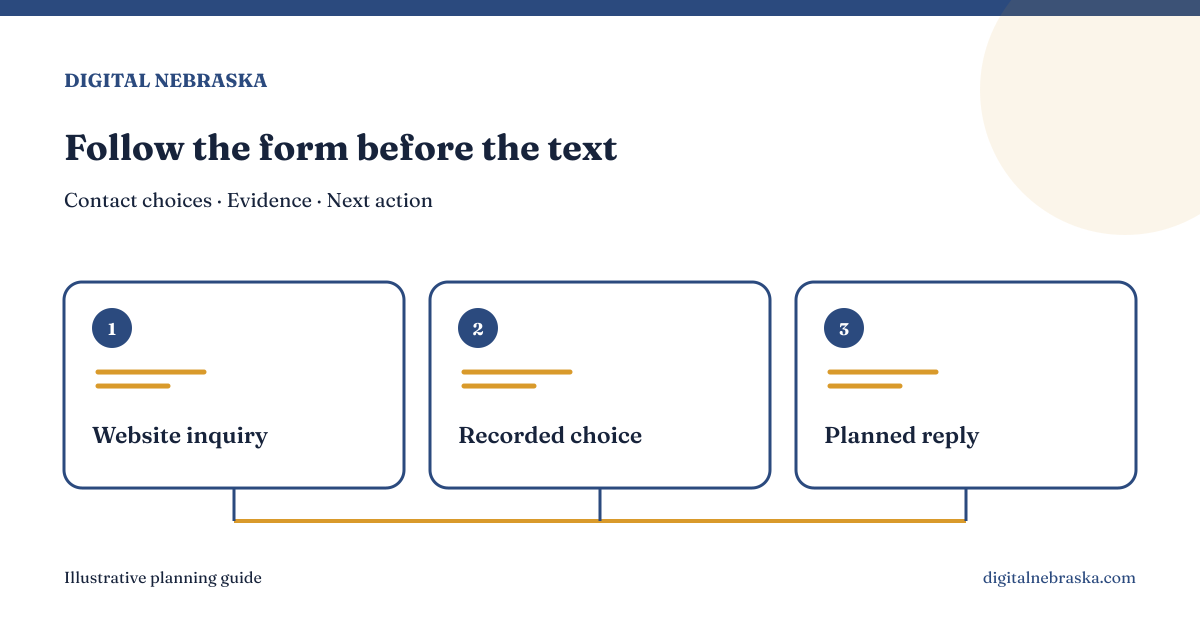
An unexpected business text can feel like spam even when it follows a website visit. Review your inquiry form before using it to start text follow-up. A website inquiry can tell you what someone wants help with; it does not by itself answer whether they agreed to receive future promotional messages. Review the form and the follow-up path together.
For messages sent by an application through a US local ten-digit number, ask your messaging provider about A2P 10DLC registration and carrier filtering. Twilio’s registration overview explains that process for its customers. Registration and recipient permission are separate checks: completing registration does not establish that a particular visitor agreed to promotional texts.
Read the exact promise at the point of entry
Look at the form as a customer sees it on a phone. Which fields are mandatory? What does the text near the submit button say about calls, texts, and the purpose of each? Save the wording that was shown when the person submitted, along with the time and source. An internal note such as “lead from website” does not preserve the original choice.
Separate service replies from campaigns
If someone asks for a website quote, route that inquiry to the person who can answer it. Do not quietly add the same number to a promotional text list. If the business wants marketing texts, define a separate, clear permission step and an opt-out path before sending. Have counsel review the exact form and message program.
Work through one case
Illustrative: A local contractor receives a quote request with a phone number. The visitor leaves an optional promotional-text choice unselected. The record should preserve that choice and route the quote inquiry for an appropriate reply; it should not mark the person as subscribed to promotions. If the form wording later changes, keep the version associated with this submission.
A privacy-policy link and a preferred-channel field serve different purposes from a valid marketing consent process. A requested service reply can still have consent requirements depending on how it is sent.
Apply the questions to this example
Illustrative worked example: These sample notes extend the case above. Roles and record locations are proposed for the example, not descriptions of a customer or this brand’s configured service. Adapt them to your own process.
| Step | Question | Sample evidence, owner, and next action |
|---|---|---|
| 1 | What did this person request? | Form submission: a quote inquiry; the estimator reviews the requested reply without enrolling the visitor in promotions. |
| 2 | Where is the exact permission wording stored? | Submission record: saved form wording/version and unselected promotional-text choice; website owner preserves both. |
| 3 | How will a stop request reach every sender? | Proposed process: the follow-up owner records any later stop request and checks affected campaign lists and pending sends. |
Put the next step in writing
Use this alongside business texting consent basics and the existing contact form. The goal is a useful reply without turning one inquiry into an unwanted campaign.
Treat the form review as a practical starting point. It does not establish legal consent or guarantee text delivery; get advice on the wording and messages your business actually uses.
Further reading: FCC call and text guidance · FTC telemarketing resources.
Contact Digital Nebraska to discuss your website inquiry and customer follow-up workflow.