How to ask for customer reviews the right way
Ask every customer the same honest way, make it easy, and steer clear of what the FTC and Google prohibit.
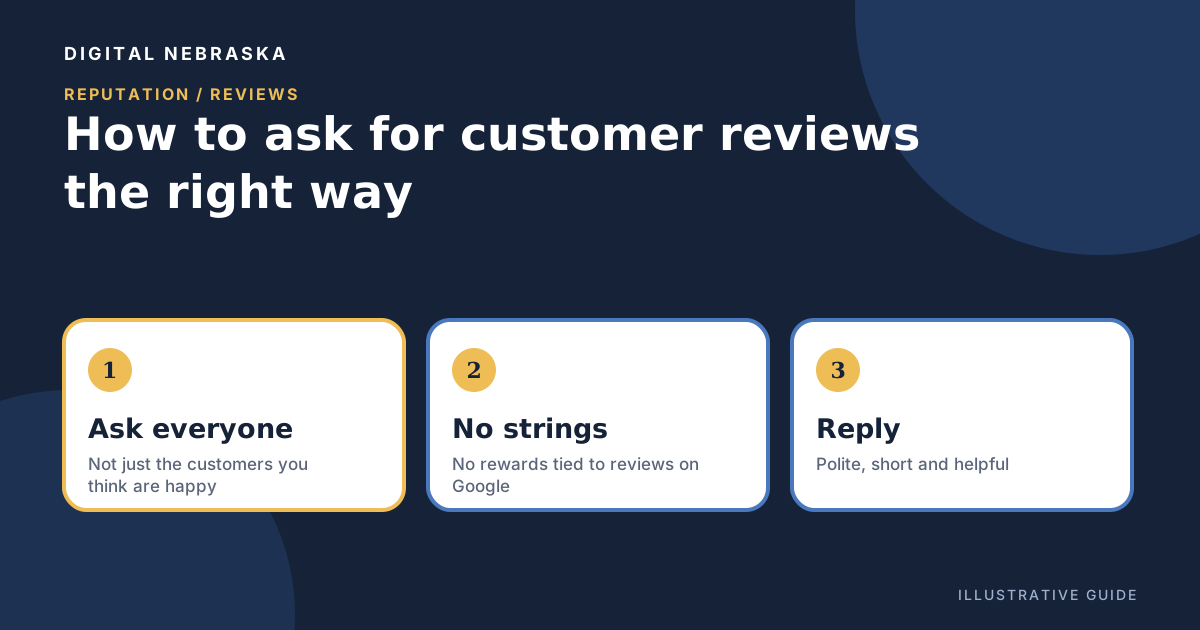
For a lot of local businesses, reviews are the modern version of word of mouth. A neighbor who has never called you before may read what your last few customers said before deciding to pick up the phone. That makes it tempting to cut corners. Don't. Asking for reviews the right way is simple, and federal rules and Google's own policies spell out what crosses the line.
This guide is general information, not legal advice. If you have questions about a specific practice, check with an attorney.
When and how to ask
The best time to ask is soon after the work is done, while the experience is fresh and the customer knows what they are reviewing. A few habits help:
- Ask every customer, not just the happy ones. More on why below.
- Keep the ask short and honest. “We'd appreciate an honest review” is enough. Don't tell people what to write or what rating to give.
- Ask in a way that fits the job. For a service call, a follow-up email or text the next day can work. For a shop counter, a printed card can work.
For example, imagine an auto repair shop that adds one line to its after-service email: “If you have a minute, we'd appreciate an honest review of your visit,” followed by a link. Every customer gets the same note.
Make it easy
Every extra step loses people. Google's tips to get more reviews say you “can ask customers to visit a Google link or scan a QR code,” and Google explains how to create that link or code. Google also notes that customers must be signed into a Google Account to leave a review.
Put the link where customers already are: your follow-up email, your receipt or invoice note, or a small card at the counter. One clear link beats a paragraph of instructions.
What the FTC's review rule prohibits
The FTC's Rule on the Use of Consumer Reviews and Testimonials (16 CFR Part 465) “went into effect on October 21, 2024.” In plain terms, it targets:
- Fake reviews. The FTC's announcement describes reviews that claim to come from someone who does not exist, “such as AI-generated fake reviews,” or from someone who did not actually experience your business, or that misrepresent the reviewer's experience.
- Incentives tied to a positive (or negative) review. The rule bars compensation or other incentives “conditioned on the writing of consumer reviews expressing a particular sentiment, either positive or negative.”
- Review suppression. Businesses may not use “unfounded or groundless legal threats, physical threats, intimidation, or certain false public accusations to prevent or remove a negative consumer review.” The FTC adds that a business may not suggest the reviews on its own website represent all or most reviews when it has hidden some based on their ratings or negative sentiment.
The rule also covers undisclosed reviews by company insiders and fake social media indicators, such as fake followers. The FTC's Q&A says the incentive section “applies whether the reviews appear on your website or third-party review platforms.”
What about asking only customers you think are happy? The FTC's Q&A says the rule “does not contain a specific prohibition against such conduct. But this practice could violate the FTC Act.” It also says the rule does not stop you from contacting a customer who left a negative review to resolve the problem. The Q&A notes that courts can impose civil penalties for knowing violations.
Google's rules are stricter on incentives
Here's where many owners get tripped up. The FTC's Q&A says its rule “does not prohibit giving incentives for reviews” as long as the review doesn't have to express a particular sentiment, and it warns that failing to disclose incentives could still violate the FTC Act. Google goes further. Its Maps user-contributed content policy says Google does not allow merchants to:
- “Offer incentives – such as payment, discounts, free goods and/or services - in exchange for posting any review or revision or removal of a negative review.”
- “Discourage or prohibit negative reviews, or selectively solicit positive reviews from customers.”
The same policy says merchants “should not require or pressure users to leave ratings or write reviews while on the premises, nor should they request that specific content be included,” and it lists asking staff to collect a certain number of reviews as an example. What Google does allow: asking customers to post reviews that “represent a genuine experience, without offering incentives to do so or attempting to influence the rating or the contents of the review.”
So for Google reviews: no discounts or giveaways for reviews, ask everyone the same way, and let customers say what they really think.
Respond to reviews, good and bad
Replying shows future customers that someone is paying attention. After you verify your business, Google lets you reply to reviews from your Business Profile, and the reviewer is notified when you do. Google's tips suggest being “professional and polite,” keeping replies short, and focusing on reviews “where you can share a helpful update or answer a question.” For negative reviews, Google advises never sharing a reviewer's private information, apologizing when appropriate, and inviting the person to contact you by phone or email to resolve complex issues privately. If you believe a review breaks Google's policies, you can flag it rather than argue in public.
Build the ask into your routine
The easiest way to ask every customer consistently is to stop relying on memory. With Digital Nebraska's email marketing, you can use a ready-made feedback sequence or add a review link to your after-job follow-up email. Automations can send that email when a contact becomes a customer, so every customer gets the same honest invitation.
Want a review routine that's fair to customers and easy on your team? Tell Digital Nebraska how you follow up after a job today.