A new-customer call needs more than a name and number
For a local business, the first call is often the first chance to show a new customer that someone understands what they need and what happens next.
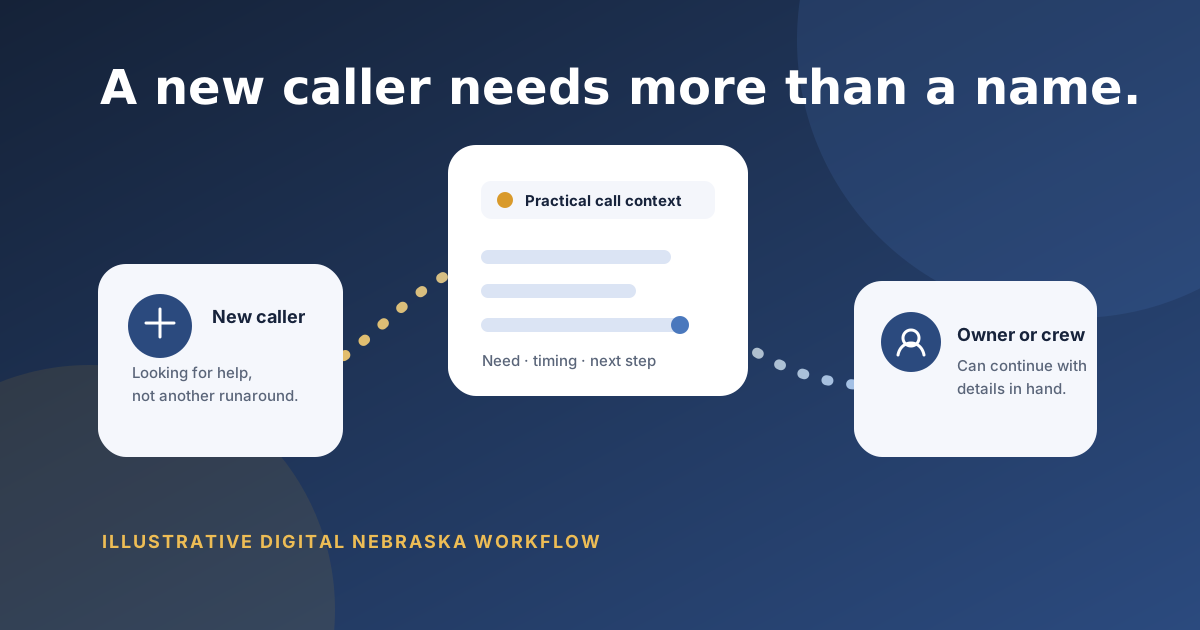
When a new customer calls a shop, clinic, office, or service business, they are rarely calling just to leave their name. They have a question, a problem, an appointment need, or a job to discuss. The person who follows up needs enough context to pick up the conversation with confidence.
Capture the reason before the return call
The best first question is often simple: what can we help with? From there, the call can capture the details that change the next step. A business may want to know the service or appointment need, whether the caller is new or returning, who they were trying to reach, and what timing matters to them. The right list depends on the business, but it should be designed around a useful follow-up.
Give the next person a practical starting point
An owner or crew member does not need a transcript of every call. They do need the parts that prevent a new customer from repeating the whole story. Keeping the reason for the call, the contact details, the useful specifics, and the intended next step in one place makes the handoff more natural.
- What does the caller need help with?
- Is this an appointment, a reschedule, a service question, or another request?
- Who is best positioned to take the next action?
- What detail would the caller expect the business to remember?
A good first call gives the business enough to respond well and gives the caller a clear sense of what comes next.
Decide whether the path is an owner, crew, or appointment
Some calls should go to a person or crew. Others can take an appointment or provide a common answer before the next conversation. Defining those routes ahead of time is especially useful during lunch, a busy stretch, or after hours, when the person who would normally answer may be unavailable.
Keep it plainspoken
The first call does not need to sound like a long intake form. It should use the language customers use and ask only for what helps the business continue. Review the questions with the people who return calls or serve customers; they know which details make the difference.
Explore how Digital Nebraska works, read the common questions, or talk with Digital Nebraska about your new-customer call path.