A useful callback starts with context
A message that says only “please call back” creates another round of work. A helpful callback starts with enough context for someone to take the right next step.
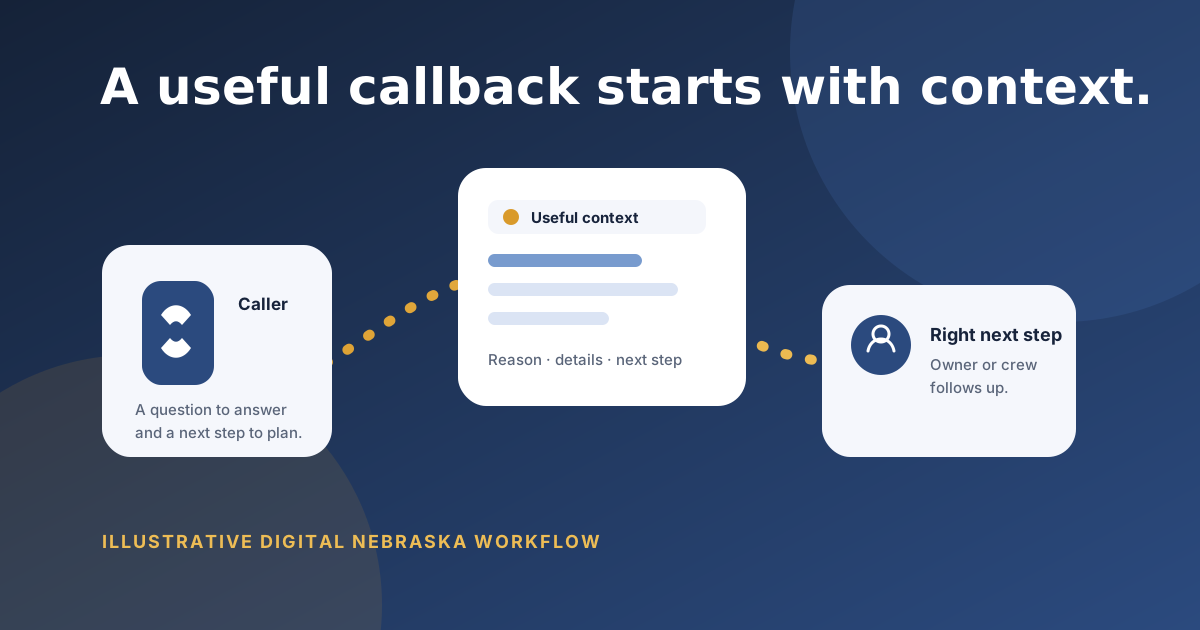
For a local business, the phone often rings while the people best able to help are serving a customer, on a job, with a patient, or in the middle of a task that cannot be paused. Returning a call matters. Returning it with a clear picture of why the person called matters just as much.
Start with the caller's reason
Before a callback reaches an owner, crew member, or office teammate, capture the reason for the call in plain language. Is the person looking for information, trying to book or reschedule, following up on something, or asking for a particular person? That simple distinction helps the next conversation begin in the right place.
Keep the details that change the next step
Not every call needs a long intake. The useful details are the ones that help the business respond well: the caller's name and return number, the topic, any timing that matters, and the preferred next step. A team can add the specific questions that fit its work without turning the first interaction into a script the caller has to fight through.
- What does the caller need help with?
- Who should see the message or make the return call?
- Is there an appointment, reschedule, or other next step to consider?
- What information will keep the caller from having to repeat themselves?
A useful callback should feel like the conversation is continuing—not starting over.
Make the route clear for busy and after-hours calls
A business can decide ahead of time whether a message goes to an owner, a crew, an office teammate, or a booking path. The same decision is useful when the team is busy or a caller reaches out after hours. The goal is not to promise every answer in the moment; it is to make sure the call has a clear, helpful path forward.
Review it like a customer would
Read the callback summary as if you were the person returning the call. Can you understand the request without guesswork? Do you know who should handle it and what to do next? If not, the intake questions or route need one more decision.
Explore how Digital Nebraska works, read the common questions, or talk with Digital Nebraska about a clearer first response for your business line.