A local appointment call needs a clear next step
When someone calls to schedule, change a visit, or ask what happens next, the first conversation should leave them with a clear path—not a vague promise to sort it out later.
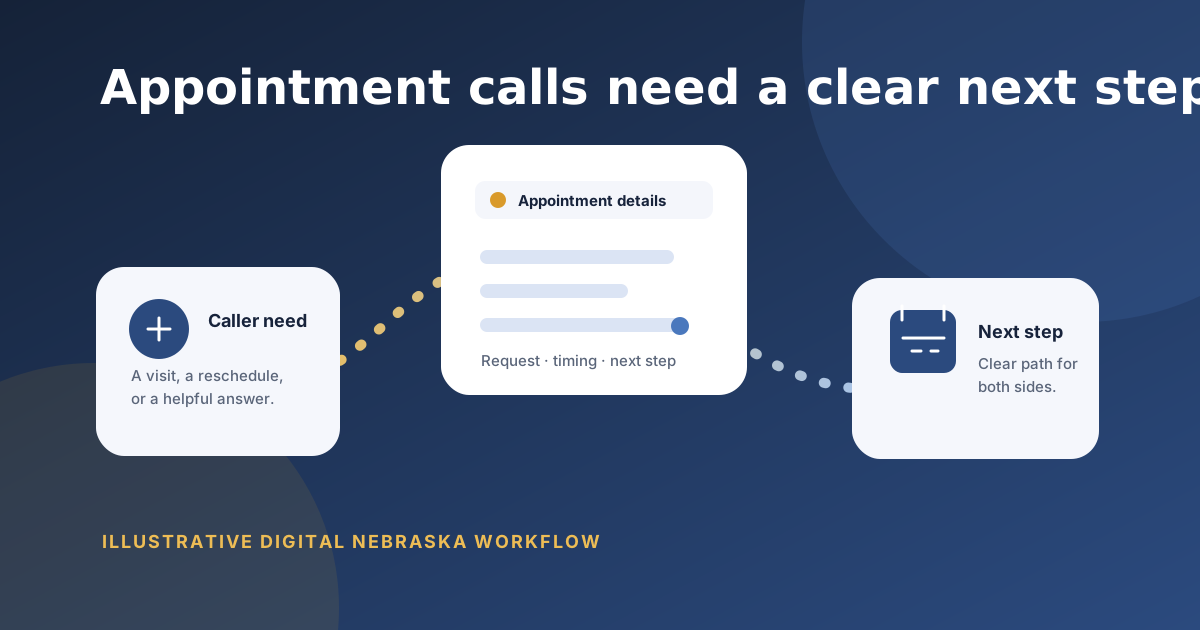
An appointment call is often a practical moment for a local business. The caller may be ready to visit, need to reschedule, or need to understand whether an appointment is the right next step. A good inbound path helps the business learn enough to respond clearly and helps the caller know what will happen next.
Understand what the caller is trying to arrange
Not every appointment call is the same. The useful first details may include the kind of visit or service the caller needs, whether they are booking or changing something, what timing matters, and whether another team member should be involved. These are not questions for their own sake; they make the next action easier for both sides.
Make the next step fit the request
Some callers can move into an appointment path. Others need a common question answered, an owner or crew route, or a message with a clear follow-up. Defining those choices in advance prevents a caller from being pushed into a path that does not fit their reason for calling.
- Is the caller looking to book, reschedule, or ask a question first?
- What details would help the team prepare for the next step?
- Who should handle the request when a person is needed?
- What should the caller understand before the conversation ends?
A clear appointment path helps the caller understand what comes next and helps the business continue without guesswork.
Keep the context with the request
If an owner, crew member, or office teammate continues the call later, they should have the reason for the appointment request and the relevant details in hand. That reduces repeated questions and makes the return conversation feel connected to the first one.
Use the language your customers use
For a local business, this does not need to sound like a technical workflow. Start with the common words customers use when they call, and keep the questions grounded in the actual decisions your team makes.
Explore how Digital Nebraska works, read the common questions, or talk with Digital Nebraska about your appointment-call path.